
How Many Bartenders Do You Need for an Event?
The Bottom Line
Most events need roughly one bartender for every 30 to 40 guests.
A simple beer and wine bar may manage with one bartender for every 50 to 65 guests. An event serving cocktails will usually need one bartender for every 20 to 30 guests.
Guest count is only the starting point. The right number also depends on what you are serving, when guests are likely to order, how the bar is set up and whether the bartender has support.
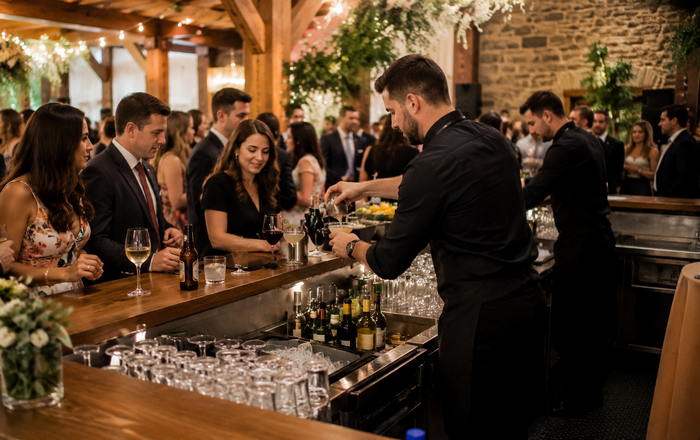
Quick Bartender-to-Guest Ratio Guide
Use these ratios as an initial estimate:
- Beer, wine and soft drinks: one bartender per 50 to 65 guests
- Beer, wine and simple mixed drinks: one bartender per 30 to 40 guests
- A limited cocktail menu: one bartender per 25 to 40 guests
- A full or cocktail-heavy bar: one bartender per 20 to 30 guests
- Premium service with minimal waiting: one bartender per 15 to 25 guests
These figures are not fixed rules. Two events with the same number of guests can need very different teams.
The Drinks Menu Makes a Big Difference
The more time it takes to prepare each drink, the fewer guests one bartender can serve.
Beer and wine
Beer and wine are relatively quick to serve, especially when bottles are chilled and glassware is ready.
One bartender can therefore handle more guests than they could at a cocktail bar.
Simple mixed drinks
Drinks such as gin and tonic, brandy and cola or vodka and soda take slightly longer. The bartender still needs to add ice, measure the spirit, pour the mixer and keep several bottles organised.
One bartender for every 40 to 50 guests is usually a sensible starting point.
Cocktails
Cocktails take longer because they may need several ingredients, shaking, stirring, straining and garnishing.
A short menu of two or three cocktails is much easier to manage than allowing guests to order almost anything.
A cocktail-heavy event may need one bartender for every 30 to 40 guests.
Plan for the Busiest Part of the Event
Do not base your bartender numbers on the quietest part of the evening.
Most events have predictable rush periods, such as:
- When guests first arrive
- Immediately after a wedding ceremony
- At the start of cocktail hour
- After dinner or speeches
- When the dancing begins
- Shortly before the bar closes
A bartender may cope comfortably for most of the evening but struggle when 40 people order within the same 15 minutes.
Staff the bar for the busiest period, not only the average demand.
Consider the Type of Event
House parties
House parties often have more relaxed and staggered ordering. One bartender may manage 30 to 50 guests if the menu is limited.
The main challenge is usually the working space. Domestic kitchens and temporary bars may have limited refrigeration, ice storage and room for glassware.
Birthday parties
Birthday parties can be busier, particularly when the crowd is younger or cocktails are being served.
A 50-person birthday may need two bartenders even though one bartender could technically manage the same number at a seated dinner.
Weddings
Weddings create concentrated demand. Guests often approach the bar together after the ceremony, after speeches and when the reception becomes less formal.
For 100 wedding guests, two bartenders may be enough for a simple menu. Three can provide better coverage during cocktail hour.
Dinner parties
A seated dinner with 20 to 40 guests may only require one bartender, especially when wine is poured at the table and cocktails are limited.
Corporate events
Corporate functions often have a busy arrival period followed by quieter service during presentations or speeches.
The bar should be staffed to handle the initial rush and any scheduled breaks when guests are likely to order together.
The Bar Setup Can Speed Up or Slow Down Service
Even the right number of bartenders will struggle behind a badly organised bar.
Bartenders should have easy access to:
- Ice
- Alcohol
- Mixers
- Garnishes
- Clean glassware
- Bar tools
- Waste bins
- Backup stock
- Water and cleaning equipment
Service slows down when bartenders need to walk to another room for ice, search for bottles or stop serving to wash glasses.
Before adding another bartender, make sure there is enough space for that person to work. Two bartenders constantly blocking each other will not serve guests twice as quickly.
Do You Need More Than One Bar?
A second bar may be worthwhile when:
- The venue is large
- Guests are spread between indoor and outdoor areas
- The main bar is far from the dance floor or seating
- One service point is likely to become congested
- Beer and wine can be served separately from cocktails
Each bar still needs its own stock, ice, equipment and staff. A second empty counter will not improve service unless it is properly prepared.
Does the Bartender Need a Hostess or Bar Runner?
Bartenders work most efficiently when they can stay behind the bar and focus on serving.
They lose time when they also have to:
- Collect used glasses
- Wash glassware
- Refill ice
- Fetch stock
- Clear empty bottles
- Carry drinks to guests
- Clean the wider event area
A hostess or bar assistant can handle these tasks.
For some events, one bartender and one hostess will provide better service than two bartenders without support. The bartender keeps drinks moving while the hostess manages glassware, cleanliness and guest service away from the bar.
Signs That You Do Not Have Enough Bartenders
Your bar may be understaffed if:
- A long queue forms soon after guests arrive
- The bartender repeatedly stops serving to wash glasses
- Ice and mixers keep running out
- Guests begin helping themselves
- Drinks become inconsistent
- Empty bottles and used glasses build up
- The host has to step in and help
- The bartender cannot keep the bar organised
The aim is not to remove every possible wait. It is to keep service steady, organised and comfortable for guests.
Can You Have Too Many Bartenders?
Yes. More bartenders do not always mean better service.
Too many staff can lead to:
- Unnecessary cost
- A crowded bar
- Bartenders blocking one another
- Confusion over responsibilities
- Too little workspace or equipment
The goal is to have enough people for the menu, guest count and busiest part of the event.
What Information Should You Provide When Booking?
To receive an accurate staffing recommendation, provide:
- Your event date
- The venue or area
- The number of guests
- The type of event
- The start and finish times
- The drinks being served
- The number of cocktails on the menu
- Whether guests will arrive together
- The number of bar areas
- Whether reusable glassware is being used
- Whether drinks must be served away from the bar
- Whether you need a hostess
Frequently Asked Questions
Can one bartender serve 50 people?
Yes. One bartender can often serve 50 guests when the menu is simple, the bar is properly set up and orders are spread throughout the event. Two may be better for cocktails or busy arrival periods.
How many bartenders do I need for 100 guests?
Most 100-person events need two to three bartenders. Two may be enough for beer, wine and simple mixed drinks. Three may be better for weddings or cocktail-heavy events.
Is one bartender enough for a house party?
One bartender is often enough for a house party with 20 to 40 guests. Larger guest numbers, complex cocktails or additional cleaning duties may require another bartender or hostess.
Do cocktails require more bartenders?
Yes. Cocktails usually take longer to prepare than beer, wine or simple mixed drinks, particularly when they require several ingredients and detailed garnishes.
Should I hire a hostess as well?
A hostess is useful when glassware needs to be collected and washed, drinks must be carried to guests or bartenders would otherwise have to leave the bar to fetch stock and ice.
Not Sure How Many Bartenders You Need?
Guest count gives you a useful starting point, but the right team depends on the drinks menu, venue layout and the type of service you want.
Send us your event details and we will help you work out how many bartenders and hostesses you need without unnecessarily overstaffing the occasion.